
5 Reasons Metal Roofing Is the Best Roof Choice for Midwest Homes
Midwest roofs take a beating. A single year can bring golf-ball hail in May, 60 mph straight-line winds in July, a foot of wet snow in December, and dozens of freeze-thaw cycles in between. That is why more homeowners, farmers, and builders across Iowa, Illinois, Wisconsin, Minnesota, and beyond are choosing metal roofing over asphalt shingles.
This guide covers the five reasons metal roofing is the best roof choice for Midwest homes. It also walks through panel profiles, finishes, underlayment and insulation, and how to size, color and schedule your project. Whether you are a homeowner, a contractor, or a lumberyard ordering for customers, you will leave with a clear plan.

1. Metal roofing is built for Midwest weather.
The biggest reason metal roofing wins in the Midwest is simple: it holds up to the weather that wears shingles out early.
Hail resistance
Many steel roofing profiles carry a UL 2218 Class 4 impact rating, the highest hail rating available. Hail may leave cosmetic dents on lighter-gauge or low-rib panels, but it rarely punctures the steel or shortens the roof's service life. Shingles, by contrast, lose protective granules with every storm.
Choose 26- or 24-gauge steel in hail-prone counties
Ask your supplier which profiles are Class 4 rated
Check with your insurer; many Midwest carriers discount premiums for Class 4 roofs
Wind uplift
Properly fastened metal panels resist uplift far better than shingles, which can lift and tear at the tabs. Fastener pattern matters: follow the manufacturer's schedule, with tighter spacing at eaves, rakes, and ridges where uplift is strongest.
Snow, ice and freeze-thaw
Smooth painted steel sheds snow quickly, which reduces roof load and ice-dam risk. Metal does not absorb water, so it is not damaged by the freeze-thaw cycles that crack and curl asphalt. Plan for snow guards above entries, walkways, and lower roofs so sliding snow comes off safely.
2. A metal roof lasts two to three times longer.
A well-installed metal roof typically lasts 40 to 70 years, so for many homeowners it is the last roof they will buy. Standard asphalt shingles often need replacing in 15 to 25 years in the Midwest, sooner after repeated hail.
Roofing type | Typical life in the Midwest | Hail performance | Maintenance |
Standing seam metal | 50–70 years | Excellent (Class 4 options) | Very low |
Exposed-fastener metal (Ag/PBR) | 40–60 years | Excellent | Low; check fasteners |
Class 4 architectural shingles | 25–30 years | Good | Moderate |
Standard asphalt shingles | 15–25 years | Poor to fair | Moderate to high |
Cedar shakes | 20–30 years | Fair | High |
Ranges are typical industry figures; actual life depends on gauge, coating, installation, and exposure.
Lifetime cost, not sticker price
Metal costs more upfront than shingles. But over a 50-year horizon, a shingle roof may be replaced two or three times, with tear-off, disposal, and storm claims each time. Spread across its life, metal is often the lower-cost roof.
3. There is a panel profile and finish for every building.
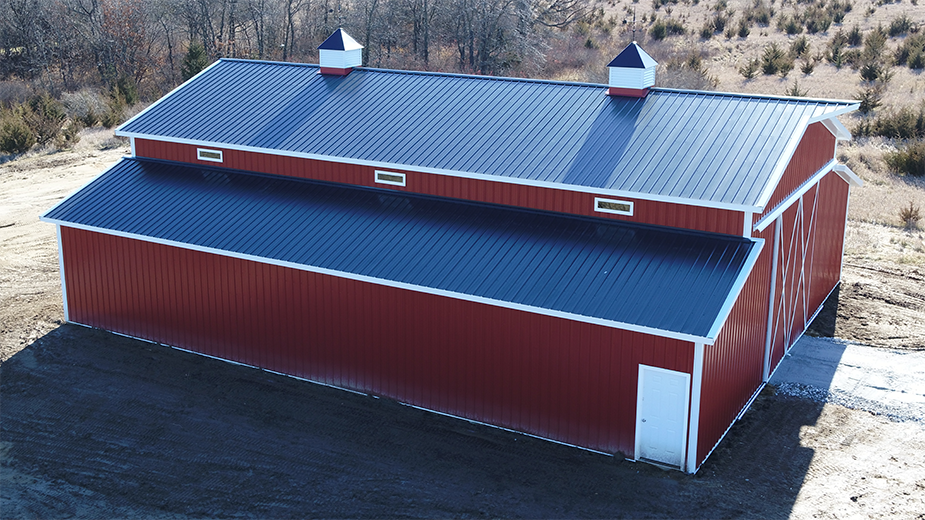
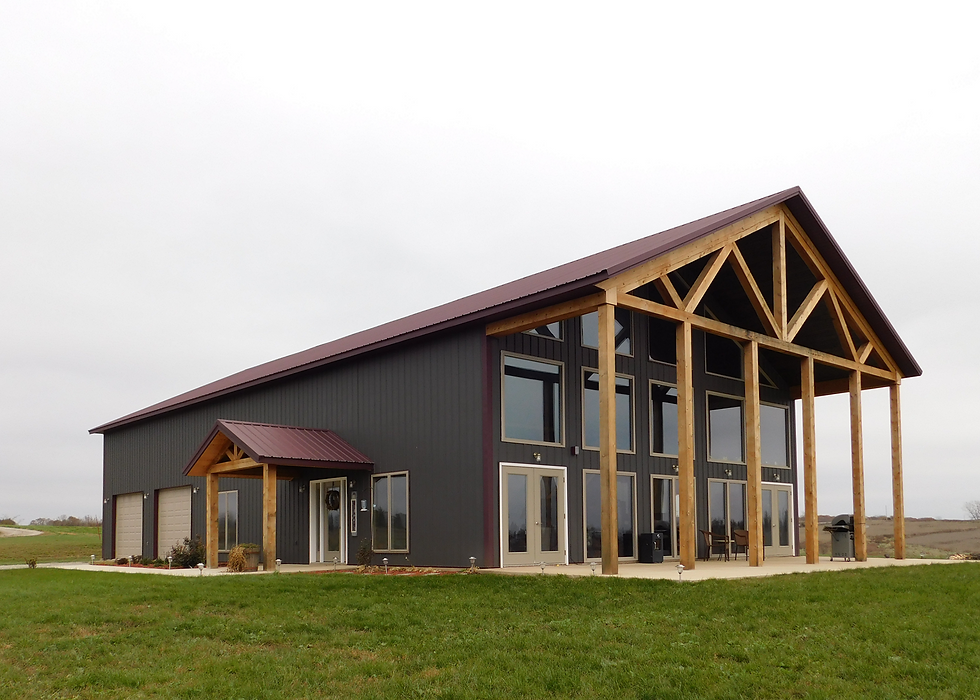
Metal roofing is no longer just for pole barns. Today's metal roof panels suit farmhouses, modern homes, garages, and shops alike.
Common panel profiles
Profile | Fastening | Best for | Notes |
Ag panel (corrugated-style) | Exposed | Barns, sheds, garages, budget residential | Most economical; fast to install |
PBR / R-panel | Exposed | Shops, post-frame and commercial buildings | Taller ribs; purlin-bearing leg for longer spans |
Snap-lock standing seam | Concealed | Homes, porches, low-maintenance roofs | Clean lines; no exposed screws on the flat |
Board and batten / lap siding | Concealed or exposed | Walls, gables, accent areas | Pairs with roof panels for a matched exterior |
Finishes and coatings
Galvalume (aluminum-zinc) bare steel: affordable and corrosion-resistant; common on ag buildings
SMP (silicone-modified polyester) paint: the workhorse finish; good color hold at a moderate price
PVDF (Kynar 500-type) paint: top fade and chalk resistance; ideal for homes where color matters for decades
Textured or low-gloss finishes: hide minor hail dimples and reduce glare
Choosing colors
Lighter colors reflect more summer heat; darker colors help melt snow sooner. Charcoal, burnished slate, and barn red are perennial Midwest favorites. Always look at a physical color chip outdoors before ordering, because screens shift color.
4. Insulation and underlayment make metal efficient and quiet.
The system under the panels decides how a metal roof performs in a Midwest winter. Get the underlayment and insulation right and you get a dry, quiet, energy-efficient roof.
Underlayment options
Synthetic underlayment: the standard for residential metal over solid decking; light, tear-resistant and breathable options available
High-temperature ice-and-water membrane: required at eaves, valleys and penetrations in most Midwest codes; must be rated for the heat under metal
Re-roof over shingles: many jurisdictions allow metal over one layer of shingles with underlayment or furring strips, which avoids tear-off cost
Insulation and condensation control
Condensation is the main risk on uninsulated metal buildings. Warm, moist interior air meets cold steel and drips.
Homes: keep a vented attic with adequate insulation, as you would under shingles
Post-frame and ag buildings: use a vapor-retarder backing, foil bubble insulation or condensation-control felt applied to the panels
Shops heated in winter: consider faced fiberglass or spray foam for higher R-value
Energy savings and noise
Painted metal reflects more solar heat than dark shingles, which can lower summer cooling loads. Over solid decking and underlayment, a metal roof is about as quiet as shingles in rain and hail.
maintenance.
5. Metal roofing needs very little maintenance.
A metal roof will not curl, crack, lose granules, rot or grow moss the way shingles and wood can. Maintenance comes down to a short yearly checklist.
Walk the perimeter each spring and after major hailstorms; look for loose trim or flashing
On exposed-fastener panels, check screws every few years and replace any with worn washers
Clear leaves and debris from valleys and gutters
Rinse off bird droppings, fertilizer dust or tree sap that can stain paint
Touch up scratches with manufacturer-matched paint to prevent edge rust
Concealed-fastener standing seam needs even less attention, which is why many homeowners choose it for their house even when the barn gets exposed-fastener panels.
Buying Guide: How to size, choose and schedule your metal roof
Metal panels are cut to length for each roof, so accurate measurements save money and delays.
How to size metal roof panels
Measure each roof plane: eave length (side to side) and rafter run from eave to ridge, measured along the slope.
Set panel length: rafter run plus the overhang at the eave, usually 1–2 inches past the drip edge. Long runs can be one continuous panel, which eliminates end laps.
Count panels: divide eave length by the panel's net coverage width (often 36 inches for Ag and PBR panels, 12–16 inches for standing seam) and round up.
Add trim: ridge cap, eave and rake trim, valleys, sidewall and endwall flashing, plus closures, fasteners and sealant.
Allow for waste: add about 5% on simple gable roofs and 10–15% on hips and valleys.
For contractors and lumberyards
Submit roof plans or a sketch with pitches for a professional takeoff. A good supplier returns a cut list, trim schedule and fastener count, which keeps your quote tight and your crew from running short.
Planning your installation timeline
Step | Typical time |
Choose profile and color; run a visual mock-up | 1–3 days |
Measure and get a material takeoff | 1–3 days |
Fabrication and delivery | As little as 2 days with a fast local manufacturer |
Tear-off or prep, then install (average home) | 2–5 days |
In the Midwest, spring and fall are peak roofing seasons. Order early, and avoid installing sealants and some underlayments below their minimum temperature.
Ordering through Metal Wholesale
Metal Wholesale is a local manufacturer of precision-engineered metal roofing and siding panels for Midwest homes, farms, and commercial buildings. Its line includes Ag Panel, PBR Panel, SnapLock standing seam, SpeedLap, and Metal Batten siding, plus Wildcat fasteners and matching trim.
Building visualizer: try panel profiles and colors on a home or barn before you buy
Dealer takeoff support: dealers and lumberyards get help turning plans into accurate cut lists
2-day jobsite delivery: panels cut to length and shipped straight to the site
Same-day pickup: available through local dealers when the job can't wait
Ready to plan your roof?
Fill the form below. With 2-day jobsite delivery or same-day dealer pickup, your new metal roof can be on site before the next storm.
Frequently Asked Questions (FAQs)
Is metal roofing good for cold Midwest winters?
Yes. Metal sheds snow quickly, does not absorb water and is not damaged by freeze-thaw cycles. Pair it with high-temperature ice-and-water membrane at the eaves and proper attic ventilation.
How long does a metal roof last compared with shingles?
Most metal roofs last 40 to 70 years. Standard asphalt shingles typically last 15 to 25 years in the Midwest, and Class 4 shingles about 25 to 30.
Will hail dent a metal roof?
Large hail can leave cosmetic dents, especially on thinner gauges, but it rarely affects performance. Heavier gauges, textured finishes and Class 4 rated profiles reduce visible damage.
Can metal roofing go over existing shingles?
Often, yes, over a single layer of shingles in good condition. Check local code and use underlayment or furring strips as the manufacturer specifies.
Is a metal roof louder in the rain?
Over solid decking with underlayment and attic insulation, a metal roof is about as quiet as a shingle roof. Open-framed farm buildings are louder unless insulated.
Metal roofing stands up to hail, wind, snow and freeze-thaw. It lasts two to three times longer than shingles, comes in profiles and colors for any building, performs well with the right underlayment and insulation, and needs little upkeep. For Midwest homes, farms and shops, that adds up to the best long-term roofing value.

Comments